Gas Line Permits and Inspections Explained
Gas line permits and inspections explained for Fountain Valley homeowners: what needs a permit, what the inspection covers, costs, and timelines.
If you are running a new gas line, replacing a section of pipe, or moving an appliance in Fountain Valley, you need a permit from the city before work starts - and a passed inspection before the gas is turned back on. That is the short answer. The longer answer involves knowing which jobs are exempt, what the inspector actually looks at, and why skipping the paperwork costs far more than the permit itself.
We handle gas line permits and inspections explained in Fountain Valley CA every week, and the questions are always the same: do I need one, how much does it cost, and how long does it take. Here is what we tell homeowners on the phone before we ever schedule a visit.
Do I Need a Permit for Gas Line Work in Fountain Valley?
In Fountain Valley, any new gas line, any relocation of an existing line, and any replacement of more than a short repair section requires a permit from the city's Building and Safety Division. Gas line permit requirements Fountain Valley enforces follow the California Plumbing Code and the California Mechanical Code, both of which treat gas piping as a regulated system - not a DIY project.
The line between "repair" and "permitted work" is where most homeowners get tripped up. Swapping a flexible connector behind a dryer is a repair. Running 40 feet of black iron pipe from the meter to a new outdoor kitchen is permitted work. So is converting a garage appliance, adding a gas stub for a fire pit, or replacing a corroded section of pipe that feeds more than one fixture.
If you are unsure which side of that line your job falls on, call us before you buy materials. We have walked hundreds of Fountain Valley homes and can tell you in a two-minute phone call whether your project needs a permit. Our Gas Line Repair Fountain Valley CA team pulls permits as part of the job, so you are not chasing paperwork on your own.
Jobs That Usually Do Not Need a Permit
- Replacing a flexible gas connector on a range, dryer, or water heater
- Replacing a gas shut-off valve at an existing appliance connection
- Tightening or resealing a threaded fitting that is not leaking
- Replacing a gas appliance with a same-size, same-location unit
Jobs That Almost Always Need a Permit
- Any new gas line, including stubs for BBQs, fire pits, and pool heaters
- Relocating a gas line or moving a meter
- Replacing more than a few feet of corroded pipe
- Adding a gas appliance where none existed before
- Converting from electric to gas for any appliance
How to Get a Gas Line Permit in Fountain Valley
Getting a gas line permit in Fountain Valley means filing an application with the city, submitting a simple gas piping diagram, paying the fee, and scheduling the inspection once the work is done. You can pull the permit yourself as a homeowner, but most people have their contractor do it - the contractor's name goes on the permit, and the contractor is the one who has to be on site when the inspector arrives.
The application itself is short. You will need the property address, a description of the work, the appliance or fixture the line serves, and a rough sketch showing where the new pipe runs and where it ties into the existing system. For a simple BBQ stub, that sketch is often a single page. For a full outdoor kitchen with three appliances, expect a more detailed plan.
Once the permit is issued, the work has to be done by someone who knows the code. We handle Gas Line Installation for Appliances Fountain Valley CA under permit regularly, and the inspection is almost always the same: pressure test, visual check, and sign-off. If you are adding a line for a whole-home generator, the process is nearly identical, and we cover that under Gas Line for Generators Fountain Valley CA as well.
What Does a Gas Line Inspection Involve in Fountain Valley?
A Fountain Valley gas line inspection is a pressure test plus a visual verification that the piping, fittings, valves, and appliance connections meet code. The inspector does not just glance at the pipe. They watch the gauge, check the joints, and confirm the line holds pressure for the required duration.
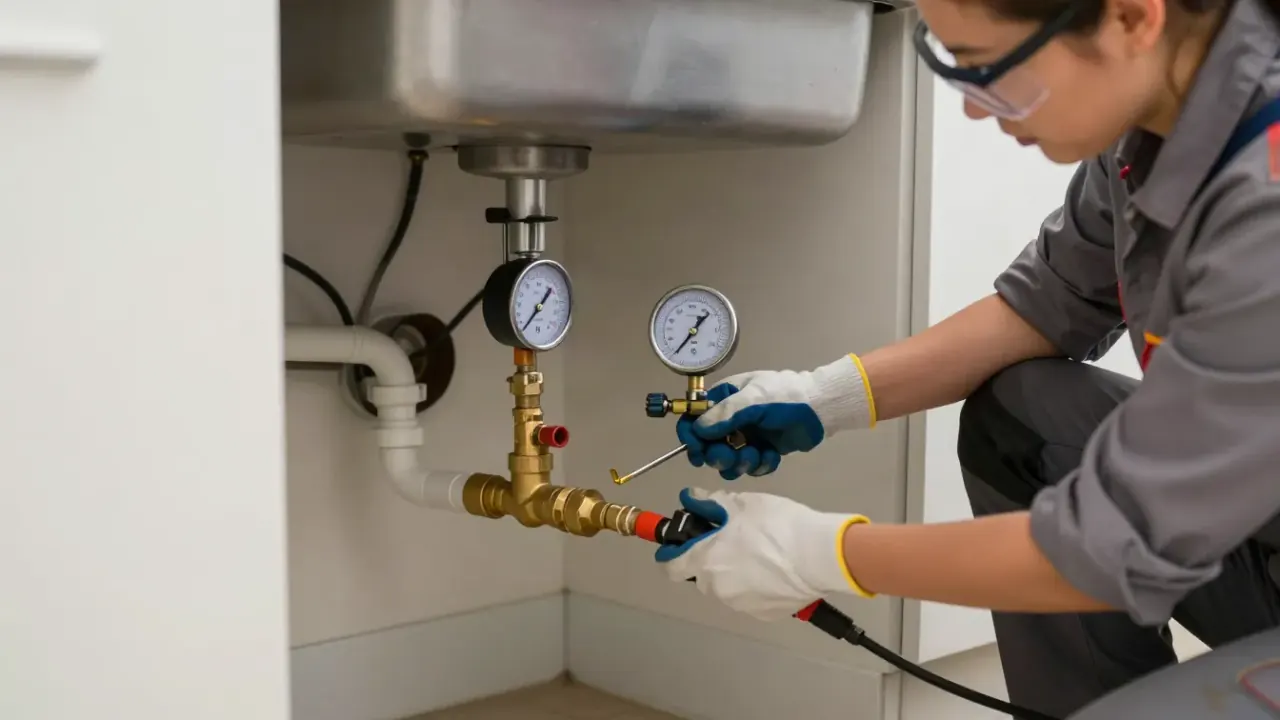
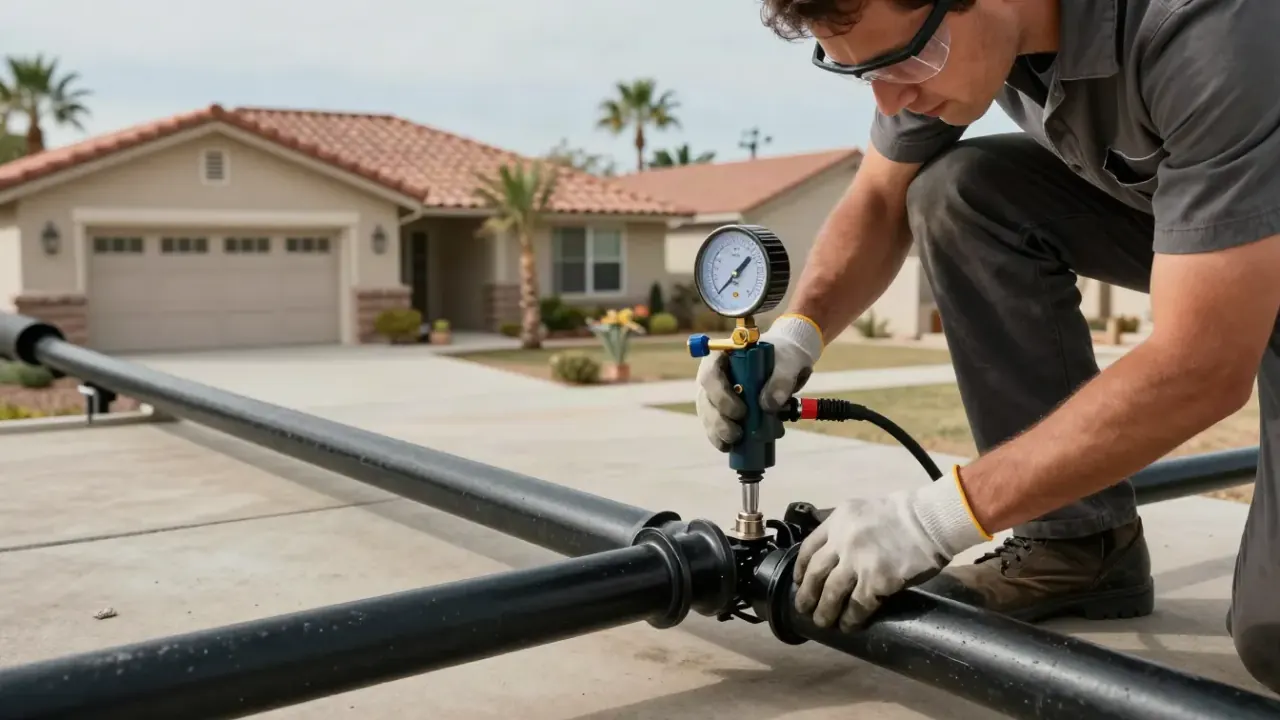
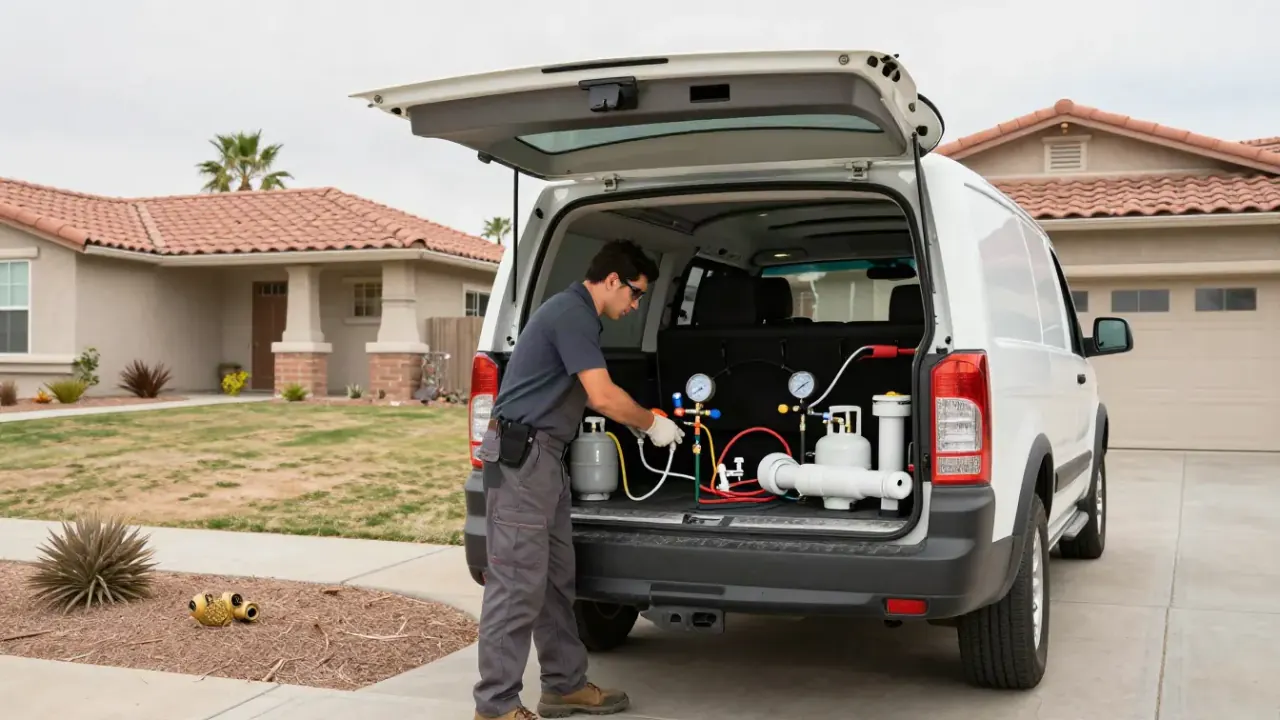
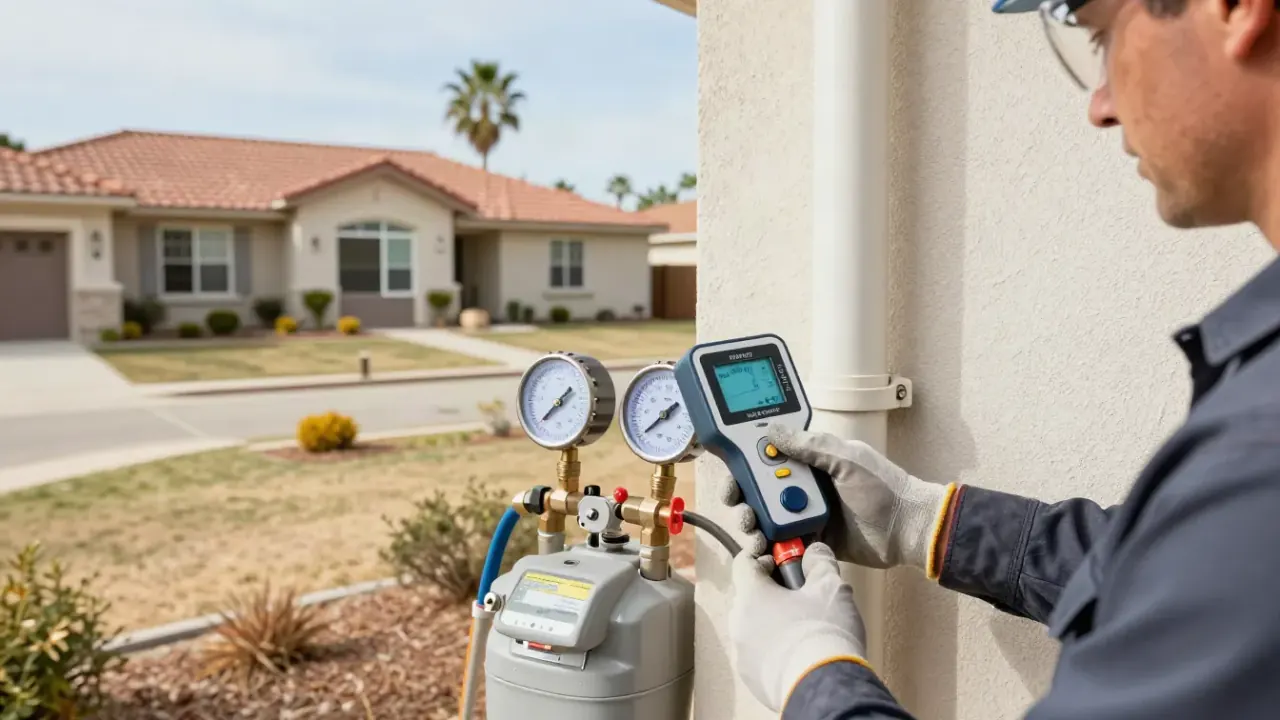
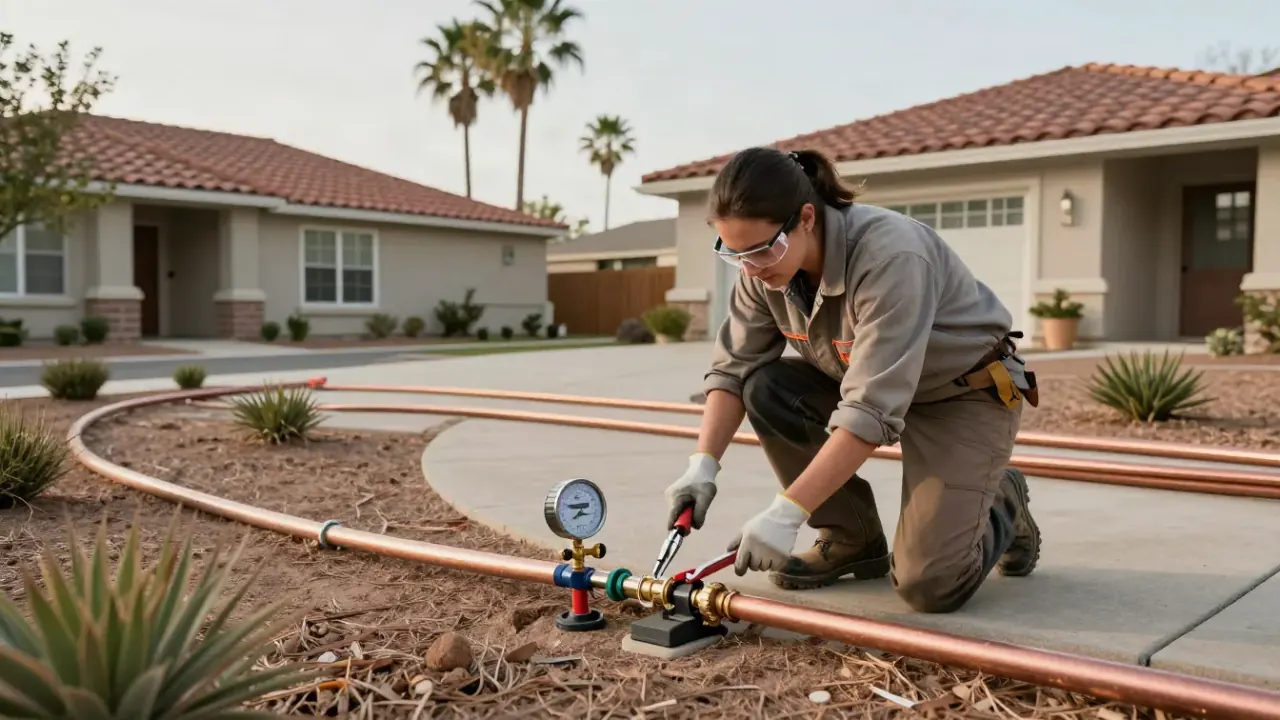
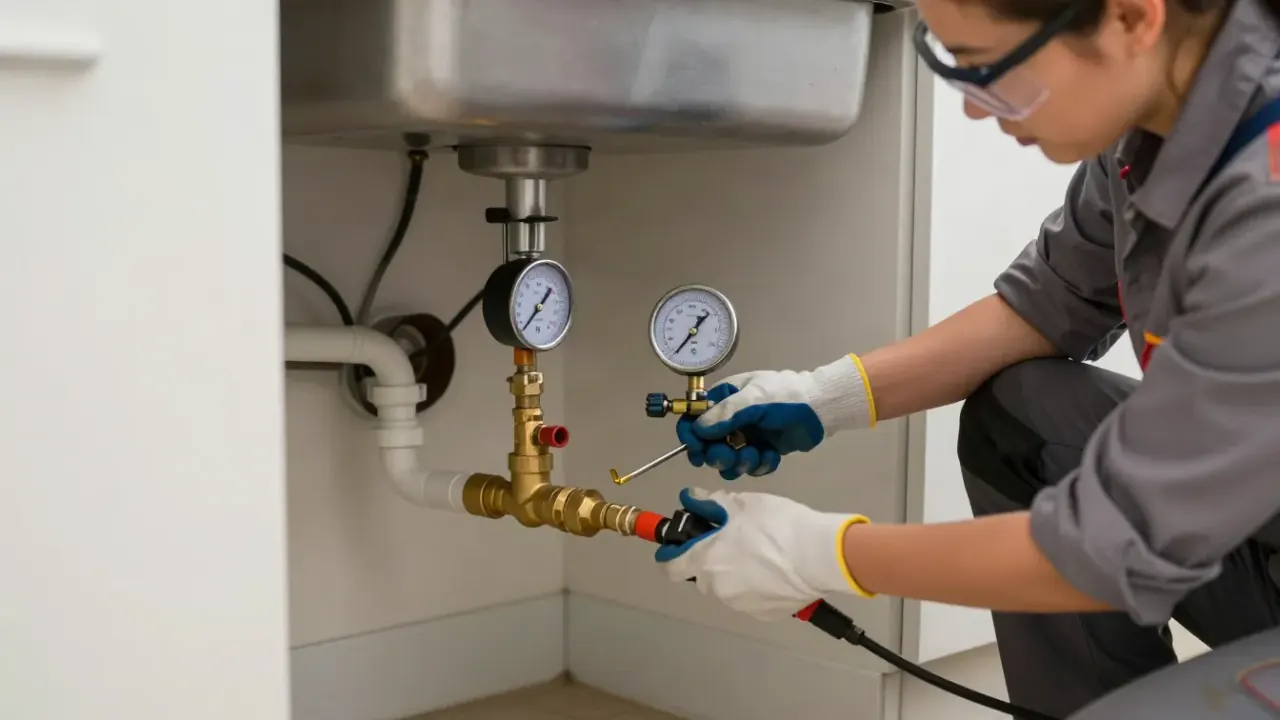
Here is what actually happens on inspection day. We cap the open end of the new line, connect a calibrated pressure gauge, and pump the system up to 10 PSI - the standard test pressure for a residential gas line in California. The line has to hold that pressure for 15 minutes with no drop. If the gauge moves at all, we find the leak, fix it, and start the clock over.
While the pressure test runs, the inspector walks the route. They check pipe size against the appliance load, confirm the pipe is supported every 6 feet for horizontal runs and every 4 feet for vertical runs, and verify that any pipe passing through a wall or floor is sleeved and sealed. They also check that the shut-off valve is accessible and that the appliance connector is the right type for the application.
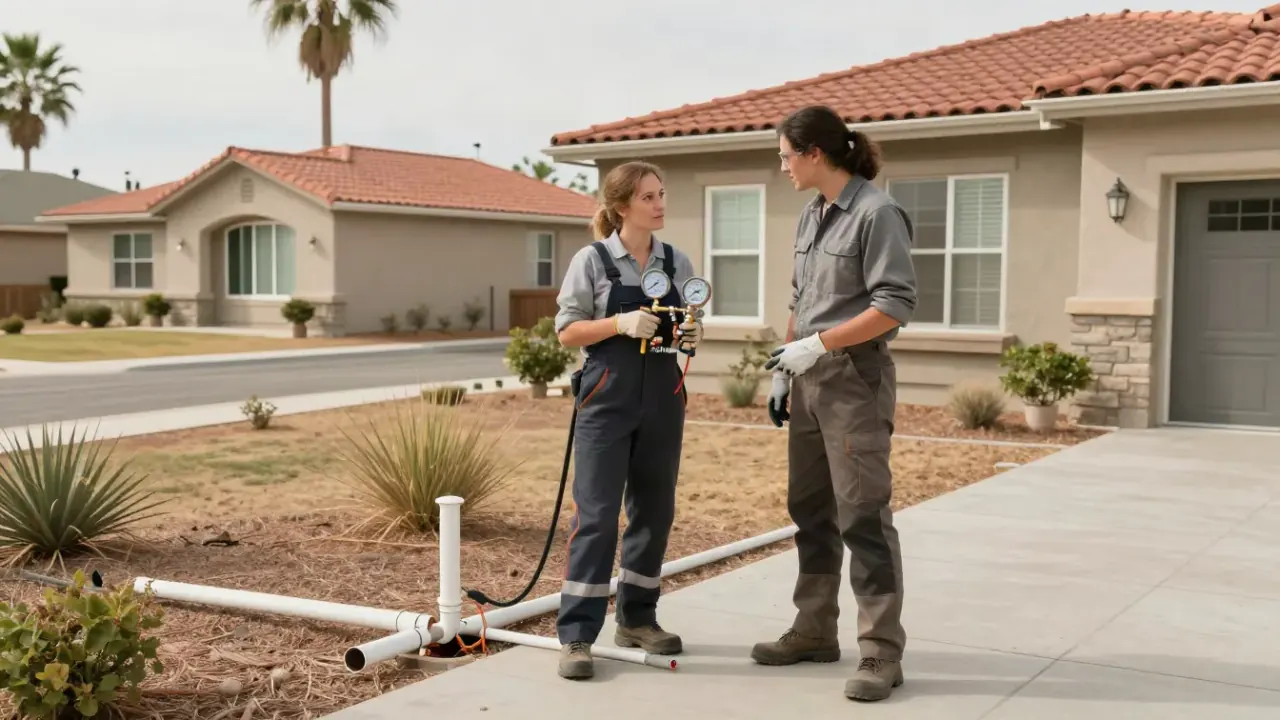
If everything passes, the inspector signs the permit card and you are cleared to turn the gas on. If something fails, you get a correction notice listing exactly what needs to change. Most corrections are small - a missing support, an unsealed penetration, a valve in the wrong spot - and we fix them and re-inspect, usually within a few days.
Gas Line Inspection Checklist Fountain Valley CA
Here is the gas line inspection checklist Fountain Valley CA inspectors work from, in plain language. We run through this list ourselves before we call for inspection, which is why our first-pass rate is high.
- Pressure test: line holds 10 PSI for 15 minutes with no gauge drop.
- Pipe sizing: diameter matches the total BTU load of all appliances on the line.
- Support spacing: horizontal runs supported every 6 feet, vertical runs every 4 feet.
- Penetrations: pipe sleeved and sealed where it passes through walls, floors, or the foundation.
- Shut-off valve: installed within 6 feet of the appliance and accessible without tools.
- Connector type: approved flexible connector for the appliance, not a reused or mismatched one.
- Drip leg: sediment trap installed on appliances that require one, like furnaces and water heaters.
- Bonding: gas piping bonded to the electrical grounding system where required.
Two of those items - support spacing and penetration sealing - cause more failed inspections than anything else. They are also the easiest to get right if you know to look for them.
How Long Does a Gas Line Permit Take in Fountain Valley?
A simple gas line permit in Fountain Valley is typically issued within 1 to 3 business days of a complete application. Over-the-counter permits for small jobs can sometimes be issued the same day if you walk the paperwork in and the plan reviewer is not backed up.
The bigger variable is the inspection, not the permit. Once the work is done, you schedule the inspection, and the city usually has a 1 to 3 business day window. Add the actual work - a half-day for a BBQ stub, a full day or more for a long outdoor kitchen run - and most homeowners are looking at 4 to 8 business days from application to passed inspection.
Two things slow this down. First, incomplete applications. If the sketch is vague or the appliance load is not listed, the reviewer kicks it back and you lose a day or two. Second, failed inspections. A failed first inspection means a correction, a re-test, and a re-schedule, which can add another 3 to 5 business days.
We build that timeline into every job we quote. If you are trying to get a fire pit or pool heater running before a family event, tell us the date and we will tell you honestly whether the schedule works.
Cost of a Gas Line Permit in Fountain Valley, California
The cost of a gas line permit in Fountain Valley, California runs roughly $150 to $400 for a typical residential job in 2026, depending on the scope and the valuation the city assigns to the work. A single BBQ stub sits at the low end. A full outdoor kitchen with multiple appliances and a longer pipe run sits at the high end.
That fee is separate from the labor and materials. A new gas line for a BBQ typically runs $600 to $1,400 installed, permit included, depending on how far the line has to travel from the meter and whether the route goes through a finished wall. A fire pit or pool heater line is usually in the same range. A whole-home generator line is a bigger project - $1,500 to $3,500 installed - because the pipe has to be sized for the generator's load and the run is often long.
What you should never do is let someone talk you into skipping the permit to save $200. If the work is ever inspected after the fact - during a home sale, a refinance, or an insurance claim - an unpermitted gas line can mean tearing out drywall to expose the pipe, paying double fees, and in some cases redoing the entire run. The permit is the cheapest part of the job.
Common Mistakes We See With Gas Permits and Inspections
The mistakes we see most often are not exotic. They are the same five or six issues, over and over, on jobs where someone tried to save a step.
- Starting work before the permit is issued. The city can require you to expose or remove work done before permit issuance. That is a costly do-over.
- Using the wrong pipe size. A half-inch line that feeds one BBQ is fine. The same half-inch line feeding a BBQ, a fire pit, and a pool heater will starve the appliances and fail the load calculation.
- Reusing an old flexible connector. Connectors have a service life. A reused one is a common fail and a real safety issue. We replace them as a matter of course - see Flexible Gas Connector Replacement Fountain Valley CA for what that involves.
- Skipping the pressure test. Some homeowners assume a soap-bubble check on the joints is enough. It is not. The inspector wants a gauge and a timed hold.
- Ignoring corrosion on the existing line. If the new line ties into a section of pipe that is already rusted, the inspector will flag it. Better to replace it now than to fail and re-test. We handle that under Corroded Gas Pipe Replacement Fountain Valley CA.
- Not being on site for the inspection. The inspector needs access to the meter, the appliance, and the test gauge. If nobody is there, the inspection is a no-show and you re-schedule.
One more thing worth saying plainly: gas work is not a place to learn on the job. A leak that passes a casual smell test can still fail a pressure test, and a line that passes pressure today can fail in two years if the fittings were not made up correctly.
When to Call a Professional
Call a professional the moment your project involves new pipe, a relocated line, or anything behind a wall. Those are the jobs where permits, pressure testing, and code compliance all intersect, and they are the jobs where a mistake is expensive to undo.
We also get calls for smaller things that turn out to be bigger. A gas smell near the meter. A water heater that will not stay lit. A shut-off valve that will not turn. Those are not permit jobs on their own, but they often reveal a line that needs work - and if the fix requires cutting pipe, you are back in permit territory. Our Gas Leak Detection and Repair Fountain Valley CA team handles the diagnosis and tells you straight whether the repair is a same-day fix or a permitted job.
If you are in one of the older neighborhoods - the tracts around Gas Line Repair in Green Valley and similar mid-century pockets - pay extra attention. Homes built in the 1960s and 1970s often have original black iron pipe that has been painted over, patched, or extended by three different owners. We pressure test the whole system, not just the new section, because that is where the surprises live.
Frequently Asked Questions
Do I need a permit for gas line work in Fountain Valley?
Yes for any new gas line, relocation, or pipe replacement beyond a short repair section. Simple repairs - swapping a flexible connector or a shut-off valve at an existing appliance - generally do not require a permit. When in doubt, call the city or call us before you start.
How much does a gas line permit cost in Fountain Valley CA?
Expect roughly $150 to $400 for a typical residential permit in 2026. The fee scales with the scope and valuation of the work. A single BBQ stub is at the low end; a multi-appliance outdoor kitchen is at the high end. The fee is separate from labor and materials.
What does a gas line inspection involve in Fountain Valley?
A pressure test at 10 PSI held for 15 minutes, plus a visual check of pipe sizing, support spacing, penetration sealing, shut-off valve placement, and connector type. If the gauge holds and the install matches code, the inspector signs off and you can turn the gas on.
How long does a gas line permit take in Fountain Valley?
A complete application is usually issued in 1 to 3 business days. Add 1 to 3 business days for the inspection scheduling and the work itself, and most jobs run 4 to 8 business days from application to passed inspection. Incomplete applications and failed inspections add 3 to 5 days each.
Who inspects gas lines in Fountain Valley CA?
The City of Fountain Valley Building and Safety Division inspects residential gas line work. The inspector is a city code official, not your contractor. Your contractor - or you, if you pulled the permit yourself - has to be on site with the system pressurized and accessible when the inspector arrives.
Get Help With Gas Line Repair in Fountain Valley
If you have a gas line project in Fountain Valley and you want the permit, the pressure test, and the inspection handled without you chasing paperwork, we can take it from here. We pull the permit, run the line to code, test it, and meet the inspector on site.
Call Fountain Valley Gas Line Repair at (657) 644-0068 and tell us what you are trying to run gas to. We will tell you whether it needs a permit and what the whole job looks like, start to sign-off.